






Impacted Wisdom Teeth
What Is An Impacted Tooth?
Although most people develop and grow 32 permanent adult teeth, many times their jaws are too small to accommodate the four wisdom teeth. When inadequate space prevents the teeth from erupting they are called impacted. This indicates their inability to erupt into the proper position for chewing and cleaning.
For more information about Impacted Wisdom Teeth or to schedule a consultation with Dr. Shimane, call our office in Castro Valley, CA at Shimane Oral and Maxillofacial Surgery Phone Number 510-885-8720.
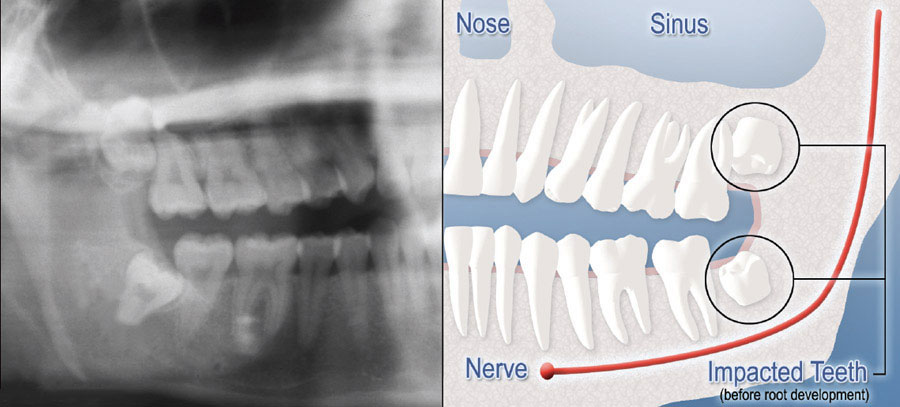
Types Of Impactions
We will need to see you for a consultation to determine if you will benefit from wisdom tooth removal. A special x-ray of your mouth and jaws (panorex) will be taken to determine if your wisdom teeth are impacted, if there is room for them to erupt, and how difficult it will be to have them removed.
- Soft Tissue Impaction: There is not enough room to allow the gum tissue to retract for adequate cleaning of the tooth.
- Partial Bony Impaction: There is enough space to allow the wisdom tooth to partially erupt. However, the tooth cannot function properly in the chewing process, and creates cleaning problems, among others.
- Complete Bony Impaction: There is NO space for the tooth to erupt. It remains embedded in the jaw bone or if even partially visible requires complex surgical techniques for removal.The impacted wisdom tooth may also be in an unusual position and difficult to remove. This situation can also arise when the shape or size of the jaw bone and other facial structures make removal of this tooth significantly more complex.
For more information about Impacted Wisdom Teeth or to schedule a consultation with Dr. Shimane, call our office in Castro Valley, CA at Shimane Oral and Maxillofacial Surgery Phone Number 510-885-8720.
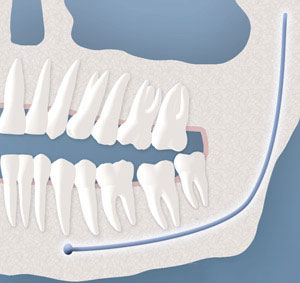 Soft Tissue
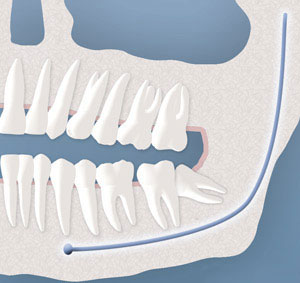 Partial Bony
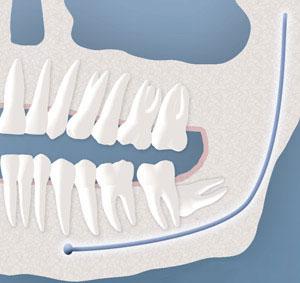 Complete Bony
Shimane Oral and Maxillofacial Surgery
Patient Testimonial
He has great bedside manner
- Danielle E
Patient Testimonial
Excellent staff and care provided!
- Shaista K
Patient Testimonial
Very helpful and kind. Definitely would recommend to a friend
- Anonymous
Patient Testimonial
It was a great experience, the whole procedure was very easy for me
- Timothy T
Patient Testimonial
Dr.Shimane's staff was amazing and really helped out with everything. I highly recommend seeing him and his staff for wisdom extraction.
- OA
Patient Testimonial
It was an easy experience. The overall process wasn't as stressful as I thought and that is due to the staff and instructions given.
- Anonymous
Patient Testimonial
Excellent Service
- Urmila S
Patient Testimonial
Excellent Service
- Anonymous
Patient Testimonial
Everything went smoothly and I had an easy recovery.
- RC
Patient Testimonial
Amazing staff and care!
- Alyssa I